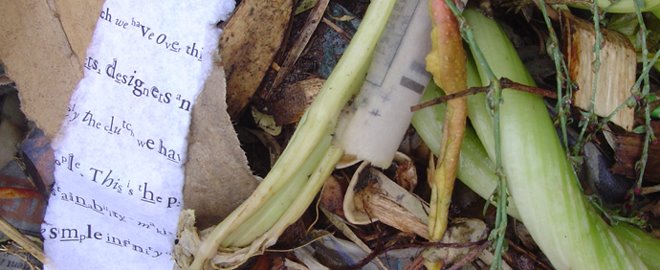
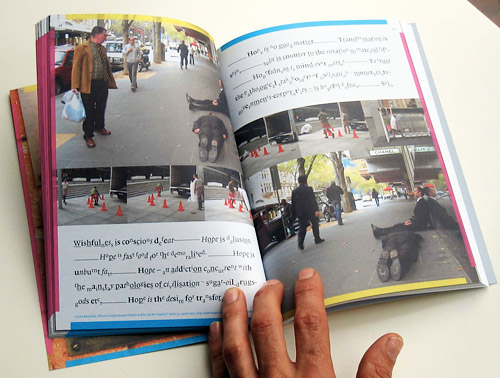
At this point, I can turn to Norbert Elias' argument about the civilizing process in Europe...essentially it came down to the attempt, largely on the part of middle class religious authorities, to improve the manners of those below: most of all by eliminating all traces of the carnivalesque from popular life. David Graeber, Possibilities, p31-32.
Earlier in his book
David Graeber writes how gradually, from the twelfth century onwards, the social authorities imbibed a culture of shame and embarrassment for all things bodily – excrement, sex, etc.; things of common substance and their joking relations – think
Rabelais’s dirty humour.
Property relations, not sacredness, was the rationale behind the church's enforcement of celibacy onto its priests. The eldest sons of priests were too often claiming church property as their inherited own, and the papacy cracked down on the loss of church property. If avoidance relations are so linked to property, as Graeber suggests, then it is little wonder that the ensuing culture of sex-secrecy – developed by so many priests struggling with celibacy, culminating in paedophilia and other abuses of power – has in turn led to the selling off of acquired properties to fund the thousands of law suites lodged by victims of their cause. It’s an interesting, sad and ironic several hundred-year cycle of avoidance, only checked due to recent demands of accountability on religious institutions by secular authority.
Every year in Daylesford there is a New Year’s Eve parade where various community groups and artists create themed floats or parade various skills, activities and crafts on foot. One year cartoonist,
Michael Leunig, with some friends made a float using two inflatable sex dolls. It was called something like 'the garden of love'. The local authorities didn't share the humour and arrested them for public indecency, including the dolls. At the courthouse, while the trial was being heard, the male doll was brought into proceedings by a local cop who’d put a paper bag over his penis. A large group of locals, including kids, turned up to express their support for Leunig's float. I believe there was not a single local person against it.
Last year, my own somewhat less contentious parade concept was in aid of my water activism; also using joking relations (based upon the behavioural relations between chance and cross-dressing). The purpose of this costume, after the joke for joke's sake, was to draw attention to a local thing of common substance – water, and its privatisation by Coca-Cola Amatil and Cadbury Schweppes for global profiteering.
Meg handed out stickers that directed people to the
justfreewater myspace page and over the next several days I watched my stats counter on the site grow measuredly.
 Photo: Peter O'Mara (as you can see he won't make Best Australian Photography, 2008, but he is included in this year's Best Australian Poems, UQP).
Zeph's mum, who was at the parade earlier on to drop Zeph off, made the joking remark, “no wonder we didn’t make it”, when she saw what I was wearing. Meg later jokingly said to me, “that’s why you're with me now”. Meg was dressed deliciously, as you’ll no doubt agree.
 Photo: Peter O'Mara
 My ex-partner was raised in a Christian household. Her parents were missionaries, her dad become a scholar and translator, responsible for overseeing versions of the Bible into Chinese and other Asian languages.
Sadly, his daughter and I now only have a relationship of avoidance based upon property rights, which regrettably over-rides a relation of common substance – our child. And it is tied up with the pressing issue of whether or not to sell the quarter acre, that constitutes the physical entity that partly feeds us and this blog: The Garden of Self Defence.
Most people, most likely, relate with all three of the modes that Graeber and anthropologists before him have outlined: with avoidance, with jokes and with common substance. However, it remains to be seen whether the dominant culture, based on private property, waste and wealth generation – abstractions of avoidance in terms of the landbase that supports us – can ever close the broken cycle generated by capitalism's corollaries, and become a society more dominantly based on common substance again: children raised by whole communities; food not transported but grown within walking distance; natural resources not transported away from food and water bowls – in essence a permanent culture, based less on manners, restriction, hierarchy and capital growth, and more on an understanding of our place within a local ecology – where we consciously particpate in securing a sustainable and permanent future for those who come after us. A gift that has been provided by those who have come before.