Showing posts with label doublewhiteAustralialine. Show all posts

Monday, June 8, 2009

Sand & skin

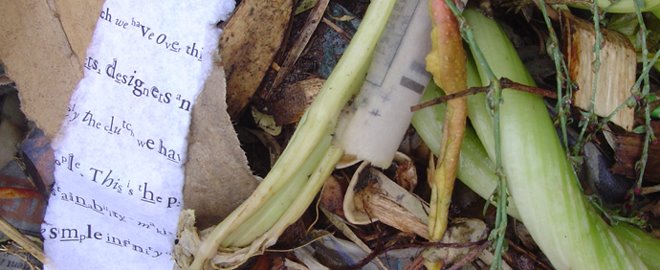
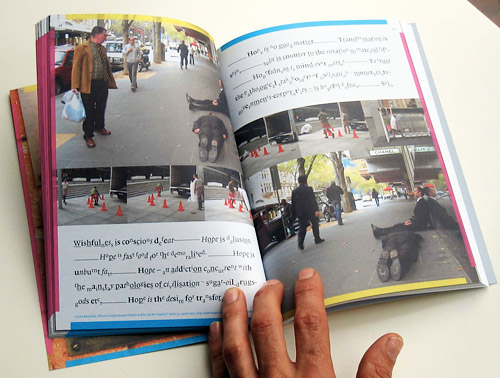
Almost every day people from all over the world come to my blog via the following two images.

If you missed the original post, I drew the above work in the sand at Port Fairy last Summer (2008). I used a stick of driftwood to etch with.


And this, etched into my flesh in 2006, represents a future societal model that has made an intelligent return to ecological functioning. WOW! all that in a tat that looks like someone has used my shoulder to rest their beer on. The original post can be read here.

Friday, June 5, 2009

Caged, the Silent Piece: 2'20"


Dja Dja Wurrung elder Aunty Sue Rankin at the Human Rights Day gathering in Melbourne, 2005
The best way [to procure a run] is to go outside and take up a new run, provided the conscience of the party is sufficiently seared to enable him without remorse to slaughter natives right and left. It is universally and distinctly understood that the chances are very small indeed of a person taking up a new run being able to maintain possession of his place and property without having recourse to such means - sometimes by wholesale...
Ian D. Clark, pp1, Scars on the Landscape. A Register of Massacre sites in Western Victoria 1803-1859, Aboriginal Studies Press, 1995 ISBN 0855752815

Thursday, January 29, 2009

Old theories of love, today


Some Medieval and Renaissance thought pertaining to love, according to David Graeber, went like this:
...when a man fell in love with a woman, he was really in love not with the woman herself but with her image; one that once lodged in his pneumatic system, gradually came to hijack it, vampirizing his imagination...Medical writers tended to represent this as a disease that needed to be cured; poets and lovers, a heroic state that combined pleasures (in fantasy, but also, somewhat perversely in the very experience of frustration and denial) with an intrinsic spiritual or mystical value in itself.
And the interrelations, between the Medieval medic and the spin-doctors of capitalism, continue in terms of how capitalism strives for the clean and the sanitised while beneath its images of wholesomeness and plastic patinas, ecologies are devastated and wasted. Language, it has been said by many, does play a big part in capitalism's veiling and mediation, it paves a civil way clear for the savagery. Think "clean coal" for example, or Coca-Cola's greenwashing in light of its production of bottled water and highly sugared, early-onset-diabetes-drinks for young people. Get 'em early says the church. Get 'em early says the corporation. Anyway, back to Graeber's Possibilities.
...lonely brooding is punctuated by frustrated urges to seize what cannot really be seized... A fair amount of "embracing" certainly did go on in Medieval Europe, as elsewhere. Still, this [lonely brooding] was the ideal, and critically, it became the model not just for sexual desire, but for desire in general.
In my early twenties, a country boy living in the city, I became obsessed with soft-porn advertising billboards, how corporate images promoting desire sanatised sex, and how graf artists played with or attacked these images. "Through her legs the tollways", was a line from a poem I later wrote called Billbored Sex when Australia's roads were beginning to be privatised and mega-billboards were popping up everywhere. Bugger-Up campaigners and graffitists were the local Oz wing of the global ad-busting movement. I was studying feminist art practices at the time and looking critically at gender representation in art and the media. And at the same time I was slavering over these images; broodingly, longingly.

Thursday, January 8, 2009

Tent city

Camping in a caravan park is essentially returning to social habits that are more welcoming and less gated. The thin sheets of canvas or tarpaulin that barely separate us all allow for greater spontaneous play and sharing of resources.

Where Permaculture is a blueprint for our species' survival in terms of food, tent cities are the future for sustainable shelter and social warming.

A permanent culture designs for constant flux. Flux and mutability is possible when land is made available for collective use, and not owned privately. Impermanent culture, or Judeo-Christian-capitalism, designs for dominance and permanency at the expense of the landbase, and thus the social base. Judeo-Christian-capitalism is the dominant hegemony responsible for global warming. No doubt the fine Jew, Jesus Christ, is deeply saddened by the 1600 years between St Augustine and George W Bush, that have paved the way for hierarchy and sociopathy to so blatantly lead the attack on the ecologies which support biodiverse life.


Zeph finishing breakfast, about to join the neighbouring kids for a hit of cricket at the council-run caravan park at Port Fairy.

Monday, January 5, 2009

We breed the pathologies

Today I stumbled across a small booklet published in 1945 called We breed the Platypus written by local naturalist David Fleay. The introduction was written by Alec H Chisholm, F.R.Z.S., who refers to Fleay as the 'god-father' to the first platypus born in captivity.

The language of Chisholm is what is most interesting about this introduction. Chisholm obsesses with Fleay's noteriety as he does with a shy Australian mammal's global image.
Fame, of course, usually selects her subjects in more or less orthodox fashion, but occassionally she indulges a whimsy and makes her choice on novel lines.
Chisholm introduces to us the platypus in terms of her gradual shift from monist indigenous being, to invader's hoax, to spectacular zoological curiosity and worthy of civilised scholary investigation. 
Aborigines had stated that the animal actually burrowed into the ground for breeding purposes and laid soft-shelled eggs, and a number of white men had made the same claim. But no definitive evidence on the point was forth-coming until as late as 1884.
Chisholm notes that English zoologist, W H Caldwell's "...hard work in the bush" to make the discovery that the platypus actually lays eggs "...caused a major scientific sensation". Then he gets to the crux of what this post is about:
As the years rolled on the platypus continued with persistence worthy of a film star, to keep itself in the news.
In 1927 the first book about the platypus was written by actor turned naturalist Harry Burrell. Earlier Burrell took five 'water-moles' to America, and for the one that survived the voyage, for a mere forty-nine days in the New York Zoo, the authorities declared that the $1400 it cost and the interest it aroused was "fully justified".

Chisholm's invader's voice speaks for itself. A voice we have inherited without acknowledging the subtext. Today academics speak of post-industrialism and post-colonialism but the attitudes that exploit and colonise go on unchecked, as if celebrity culture has delivered us from the cult of the aristocrat.

I can't get out of my mind the poet's words: "Our elders are sick". It seems to say everything about how white Australia has, for the most part, ignored Aboriginal eldership and replaced it with abstraction and mediation.