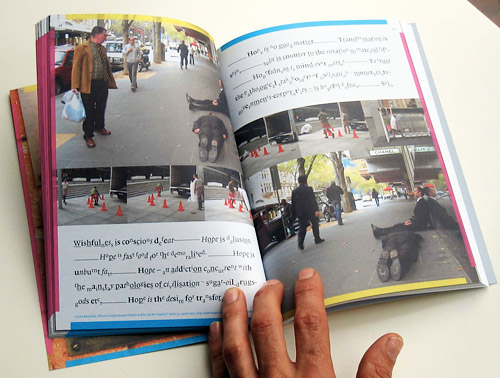
What we know is based on direct experience, and the things we experience are twofold: the things we can see and touch, and our own mental activity... p.105
Leszek Kolakowski suggests Ockham's philosophy "opens up a deep rift, an unbridgeable chasm, between natural knowledge and faith"; the physical and the abstract, at least in the thirteenth century.
War generally is the result of unbridgeable chasms between the physical and the mental; of resource and land sovereingty and ideological or religious superiority. There is generally the oppressor (who's in expansion mode) and the oppressed (who's in resistance mode).
When wars are fought Ockham's Razor goes out the window, and therefore multiplicity is posited beyond necessity. I used the following Orwell quote in my last book to begin a chapter titled The problem of civilisation.
Actions are held to be good or bad, not on their own merits, but according to who does them, and there is almost no kind of moral outrage – torture, the use of hostages, forced labour, mass deportations, imprisonment without trial, forgery, assassination, the bombing of civilians – which does not change its moral colour when it is committed by "our" side. George Orwell, Notes on Nationalism, 1945Anthony Loewenstein's Zionism is a clear-eyed practice of Ockham's Razor; in other words, 'all other things being equal, the simplest solution is the best' – two states, no greed, permanent peace, checked superiority. Or, as my friends Peter O'Mara and Jeff Stewart have posited among the gum trees –